Tag Archives: books

9 insights from Jacob Tomsky’s memoir “Heads in Beds”

headsinbeds

I am no stranger to hotel rooms. All through middle school, high school and college I participated in competitive speech and debate (and then for 3 more years I stuck around to coach it). This meant most weekends I was packing up panty hose, pajamas and pearls, hopping in a plane or a bus or a van and checking into a hotel for 2-5 day tournaments in  cities not my own. Which is why when I heard a segment on NPR about Jacob Tomsky’s book “Heads in Beds: A Reckless Memoir of Hotels, Hustles and So-Called Hospitality” it went straight on my reading list. Did front-desk clerks really sell keys to rooms in shady “under the table” deals like a certain unnamed DOF was so sure of? How dirty ARE those sheets and were we right to check for bed bugs upon arrival? Why in Jesus’ name did those key cards stop working at the most inopportune moment?!? While Tomsky’s book covers accommodations on the more luxury end, it is certainly eye opening and titillatingly honest for any reader who has been met with the question, “Checking in?’

I thought I would share some insights from his tale. Here are nine!

On free snacks- Check into your room and empty the mini-bar into your suitcase, smoke a cigarette in the room and then call down to the front desk complaining of a strong smell of smoke. You will be switched to a new room and there will be no way of tracing those purchases to you.

On the powers of furniture polish Housekeeping frequently uses furniture polish on the mirrors to get a streak-free look. Where else does this tactic come in handy? The water glasses. Ever notice there isn’t any dish soap on a housekeeper’s cart? Yet, she is responsible for cleaning those glasses at the end of your stay.

On the oldest profession “Like milk and cereal: whores and hotels.”

On polite ways to decline help from a bellman “I can go up alone, but thanks anyways.” “No thank you, but I appreciate it.” “I think I would rather just go up alone, if that’s okay.”

On bellmen’s love of bricks (aka $100 bills) The bottom right corner of the new $100 bill features a color-shifting 100 that is slightly raised. This can be used by bellmen to convince unsuspecting desk clerks that a one-hundred dollar bill has such POWER that they can pick one out of a line up even when blind-folded…or you could use it as a neat parlour trick.

On the AAA Diamond ranking There are certain amenities a hotel must boast in order to receive the elusive fifth diamond, including; pool, full spa, TVs larger than a specified minimum in each room and long dead bolts on doors.

On booking online Booking your stay through a third party website pretty much guarantees you the worst room possible. But…

On how to get the best room regardless “Just hand over a twenty at check-in and say, Give me something nice.””

On the bottom line As a guest, politeness is key and money talks. Be kind to staff, tip who you can and who knows? You may come back to your room to discover a complimentary bottle of vino or stumble your way into a suite upgrade. Have a great stay!

hotel

Do you stay in hotels a lot? I don’t really anymore but for a good chunk of time there it felt like I lived in them. Have you read this book? Would you? I highly recommend it!

Reading nostalgia.

Littlewomen


Did your parents read “chapter books” aloud to you when you were little? My mom would pick my sister and I up from school and drive our mini-van over to wait a half hour or so for my brother’s school to let out. In those little time slots, which could have been filled with whines of boredom, we were transported by way of Little Women, Little House on the Prairie, Pippi Longstocking, Heidi, Five Little Peppers and various Maria Von Trapp biographies to lands far away from parking lots on Price Road in Lexington, KY. Lands where little girls can live in houses dug out of a hill, lift horses clear over their head and play the piano beautifully–even when dying of scarlet fever. How lucky we were to have such stories float through our brains and imaginations as we climbed into the backseat to sneakily tug on ballet leotards. How lucky to hear stories of strong, intelligent, resilient and kind women and girls–real OR imagined.


What books were you lucky enough to hear as a young pup? What stories invoke your reading nostalgia? Do you feel they shaped who you are today? Or at least what you enjoy reading?
(Book cover photo via here.)

Book Club: In Pursuit of WHY it Gets Better Pt. 3

Happy Friday, Delight seekers!  I hope you all have had a fantastic week.  My sister, Beth, asked me to step in this month for the extended reading portion of her virtual book club!  As a self-professed expert and undercover anthropologist of the adolescent and teenage psyche, I jumped at the offer to put my knowledge to good use.

 Why undercover, you ask?  Well, it’s not difficult to see that I can slip into the world of teenagers very easily.  I look young. Just last weekend I was asked if I would prefer a child’s menu at a restaurant.  In one month I will begin playing a role which is a whopping 10 years my junior. I get carded every time I try to go to an R-rated movie.  Therefore, it is incredibly easy for me to slip into the pubescent mind set and see firsthand the effects it could have on an individual.  I can’t even count the number of times I got the up and down look from high school girls at the mall while shopping for an Easter dress just yesterday afternoon! Being a 23 year old woman, it didn’t affect me (“Honey, in 8 years you’ll want to wear an old man sweater, too,” my mind said with a hearty chuckle…), but imagine if I had been the 16 year old that they believed they were judging!  It could tear a girl down!  I am using this research and my own experiences to write a musical about a girl’s battle to find her true self.  And we all know that I am utterly obsessed with coming of age stories.  I believe they are one of the great human connections that bring us together as a species, because every one of us has gone through the trying time that is adolescence. Therefore, reading this book has been a (wait for it…) DELIGHT, and I would be honored to share with you some extended reading to further enhance your experience and knowledge.  Let us journey together through the cafeteria fringe…

geeks

 Let’s start with some further reading about the book and Robbins’ Quirk Theory from around the web:

An interview with Robbins on Live Science, an educational website targeted at students.

A review on the book by New York Times reviewer and Journalism professor, Jessica Bruder.

And of course, NPR has nothing but good things to say!

teenbooks

Now on to my literary bread and butter…coming of age stories that highlight personal discovery and becoming comfortable with who you truly are:

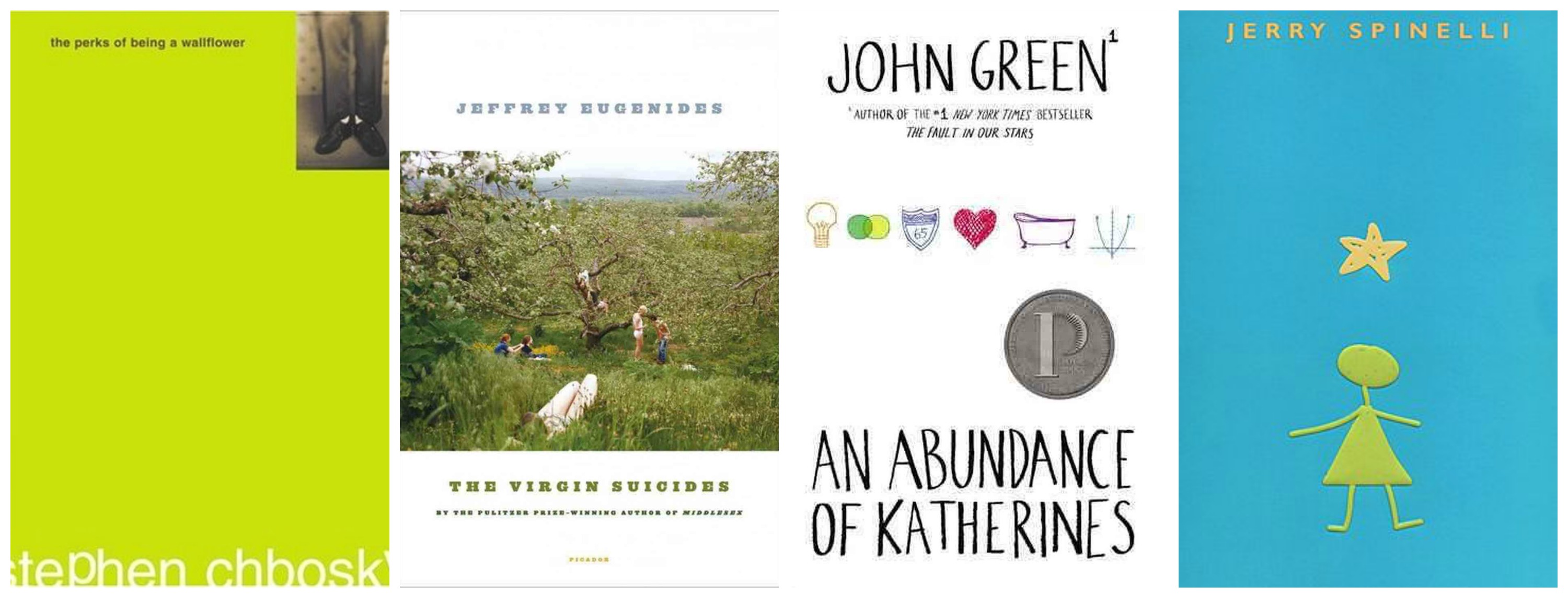
 Stargirl by Jerry Spinelli

 An Abundance of Katherines by John Green

 The Virgin Suicides by Jeffery Eugenides

 The Perks of Being a Wallflower by Stephen Chbosky

cafeteria

Not feeling like cracking the spine of a novel?  That’s ok too:

Non-fiction:

Queen Bees and Wannabes by Rosalind Wiseman – The book that launched a thousand gifs by inspiring the CLASSIC movie, Mean Girls.  Forever one of my favorite works of cinematic genius.  Thank you, Tina Fey.

Poetry:

The Realm of Possibility by David Levithan – I read this collection of poems while I was performing Spring Awakening every night…talk about getting me in the right state of mind!  Angst!  Heartbreak! Drama!

 Plays:

Spring’s Awakening by Frank Wedekind – I could write a 30 page paper about…oh wait. I did that my senior year of high school.  Just read it and then listen to the cast recording of Spring Awakening the musical and let your inner 14 year old laugh and cry along. Because it really is just the bitch of living.

 The Metal Children by Adam Rapp

 Speech and Debate by Stephen Karam

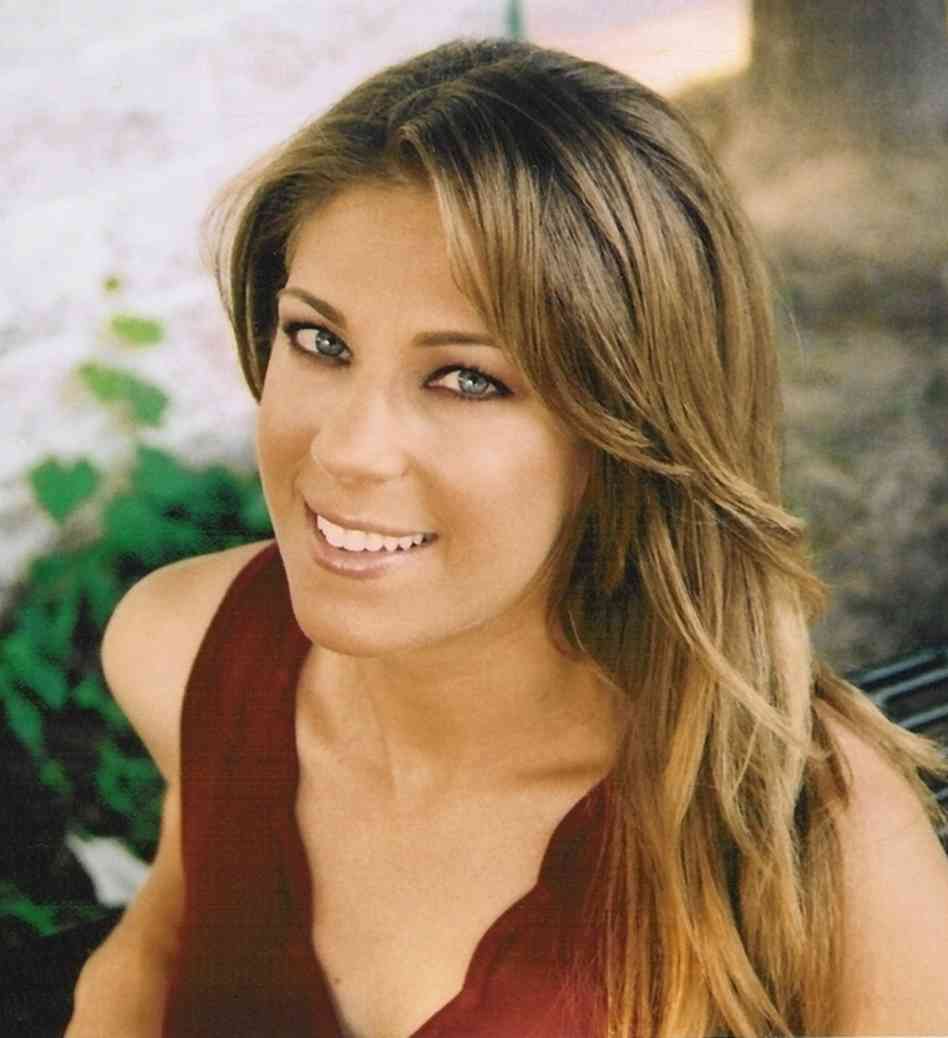
alexandrarobbins

 And finally, Alexandra Robbins has many more books for you to read, because life actually does go on after high school!  I know which one I’m checking out of the library next:

 Pledged: The Secret Life of Sororities

 The Overachievers: The Secret Lives of Driven Kids

 Quarterlife Crisis: The Unique Challenges of Life in your Twenties

 Secrets of the Tomb: Skull and Bones, the Ivy League, and the Hidden Paths of Power

Happy reading, and CONGRATULATIONS!  If you’re reading this, I am proud of you.  Why?  Because you got through the trying time that is adolescence. It was probably really hard.  It probably changed how you acted and how you viewed yourself.  You probably lost friends. You probably felt some really intense and angsty things, and probably acted on them.  But you made it, and you became an incredible, ever changing human being.

-KT

Thanks so much, Katie! Wanna get involved in the Finding delight. book club? Email me: ebeth.berger@gmail.com. Let’s talk books! ❤ And tune in next week for my final review. 

Book Club: In Pursuit of WHY it Gets Better Pt. 2

This month in the Finding delight. virtual book club we’re traveling back to the world of cliques and cafeterias with the help of Alexandra Robbins’ journalistic prowess in The Geeks Shall Inherit the Earth: Popularity, Quirk Theory and Why Outsiders Thrive After High School. This week, I’ve found some extended watching–in the way of interviews, movies and other internet gems–to help us nail down the answer to our over-arching questions: Why do things get better once you’ve taken off that high school cap and gown? How did our own differences suddenly elevate our social experience when before they felt so demoralizing? Check out the videos and review the questions raised throughout this post…remember, we’re traveling back to high school here so there may or may not be a test. ; )

More with Alexandra Robbins

An interview with the author herself in which she discusses why cliques are so prevalent, how schools help instead of hinder the teenage social hierarchy and what parents can do to dissuade their kids from feeling like social outcasts…

What would you tell a high schooler today if they confessed they feel flawed for not fitting into the social in-crowd? 

Robbins delivers a quick PSA on why “You’ve got to be proud to be an outsider.” She rattles off a laundry list of now famous individuals who identified with the outsider label as children or young adults. Now that I’m far enough into “Geeks” to feel like I really know the youth Robbins follows for a year, I have begun to recognize the qualities in their teenage selves that really COULD set them apart as adults. In this video, Robbins talks about Taylor Swift being ostracized in middle school for her intense love of country music. Similarly, the outsiders have qualities which will no doubt put them ahead of the pack in terms of employment, relationships and all sorts of social standing metrics.

Being different makes you awesome and some day people are gonna appreciate you for who you really are.” 

What qualities do you exhibit which exemplify Robbins’ “quirk theory”? Can you think of more examples of individuals who went from outsider to success story?

And just for fun, here is Alexandra Robbins on The Colbert Report discussing another book she wrote about high schoolers–The Overachievers: The Secret Lives of Driven Kids.

How do you think this quest for academic success/college acceptance as end goal affects social inclusion/exclusion? 

Cinematic Renderings of the High School Experience

My top 5 favorite “High School Movies”:

1. Ferris Bueller’s Day off

2. 10 Things I Hate About You

3. The Breakfast Club

4. Mean Girls

5. crazy/beautiful


And if you have a lot of time on your hands just watch all of Friday Night Lights!

What do these films get right about the high school experience? What do they get wrong? What’s your favorite movie about high school? Is there a movie that shaped your own teenage experience simply because it was about teens and you watched it WHILE you were a teen? #meta 

Remembering the Past/Help the Future

In the end, this book strikes a cord with so many because we’ve all been there. While it may be easier to come out the other side and benefit from “quirk theory,” I’d like to challenge you to peek back through that tunnel at the person you were. Have an old VHS tape of a choir competition? Watch it. Did you keep a journal full of poetry and essays? Read it. Look through old photo albums, class assignments, defunct for a decade Livejournals. This little trip down Nostalgia Boulevard could hold valuable information for how you interact with struggling teenagers in the future. It’s easy to put the past behind us and just say “Yeah, high school sucks but it gets better.” But a more concrete answer can be a lot more enlightening. After my own excavation of high school artifacts I’ve found this example: Yes, it was crazy weird that I felt the need to deliver a rather dramatic monologue for a talent show Fall semester of my freshman year of high school. Considering all the popular kids treated speaking in public like a joke and were more focused on sports than spotlights, this was in-crowd suicide. Yet, fast forward four years and speaking in public would get me into college and earn me all kinds of resume boosting awards. Fast forward four more and things like job interviews and work-place negotiations feel like no big deal. With the clarity of over a decade’s removal from that example I can see the difference between me and the in-crowd, in that instance, was bravery.

And now that we’ve isolated some of the things which made us unique in high school and thought of concrete examples for “quirk theory” in our own lives, the final extended watching I would like you to do is….real life, current high schoolers. Go support some kids. As I’ve said before, the school system is doing everything it can to support exclusion by putting certain kids, groups and extracurriculars on a pedestal. Let’s strive to counteract this trend by building up the kids who are different in similar ways to our high school selves. Judge a speech tournament. Go to a play. Buy a piece of art. Donate to a gaming club. Speak at schools about your job. Coach something. Volunteer. Talk to kids about their interests. Cheer for the marching band. Got more ideas? Leave ’em below! I think we can all commit to doing one of these things this month. : ) Let’s do it! 

If you could write a letter to your high school self what would it say? If you could sit down with one group of kids and READ them your letter to yourself who would they be?

 Dear Mr. Vernon, we accept the fact that we had to sacrifice a whole Saturday in detention for whatever it was we did wrong. But we think you’re crazy to make us write an essay telling you who we think we are. You see us as you want to see us – in the simplest terms, in the most convenient definitions. But what we found out is that each one of us is a brain…and an athlete…and a basket case…a princess…and a criminal…Does that answer your question? 

~The Breakfast Club~ 


Book Club: In Pursuit of WHY it Gets Better Pt. 1

bfastclubquote

When Dan Savage’s “It Gets Better Project” came out in 2010, a series of YouTube videos directed at teenagers who were the victims of homophobic bullying, something didn’t feel right to me. Here were a bunch of stories by people who had, yes, admittedly made it through to the other side, telling our youth a common tale–painstaking childhood, turning point, and a happily ever after. What struck me as unsettling was how un-nuanced this narrative arc was…surely there was more to the story than happenstance. Did we think that little of the children watching that we could only tell them things WOULD get better but not HOW to make them better? Yet, there seems to be a common truth for all those who’ve made it through the hallowed halls of secondary education–gay, straight, or otherwise–perhaps not entirely unscathed but made it through nonetheless; it IS better on the other side. So perhaps the question isn’t “How does this happen?” but “Why?” Why do the teens who didn’t have a spot at the cool cafeteria table end up as success stories in adulthood?

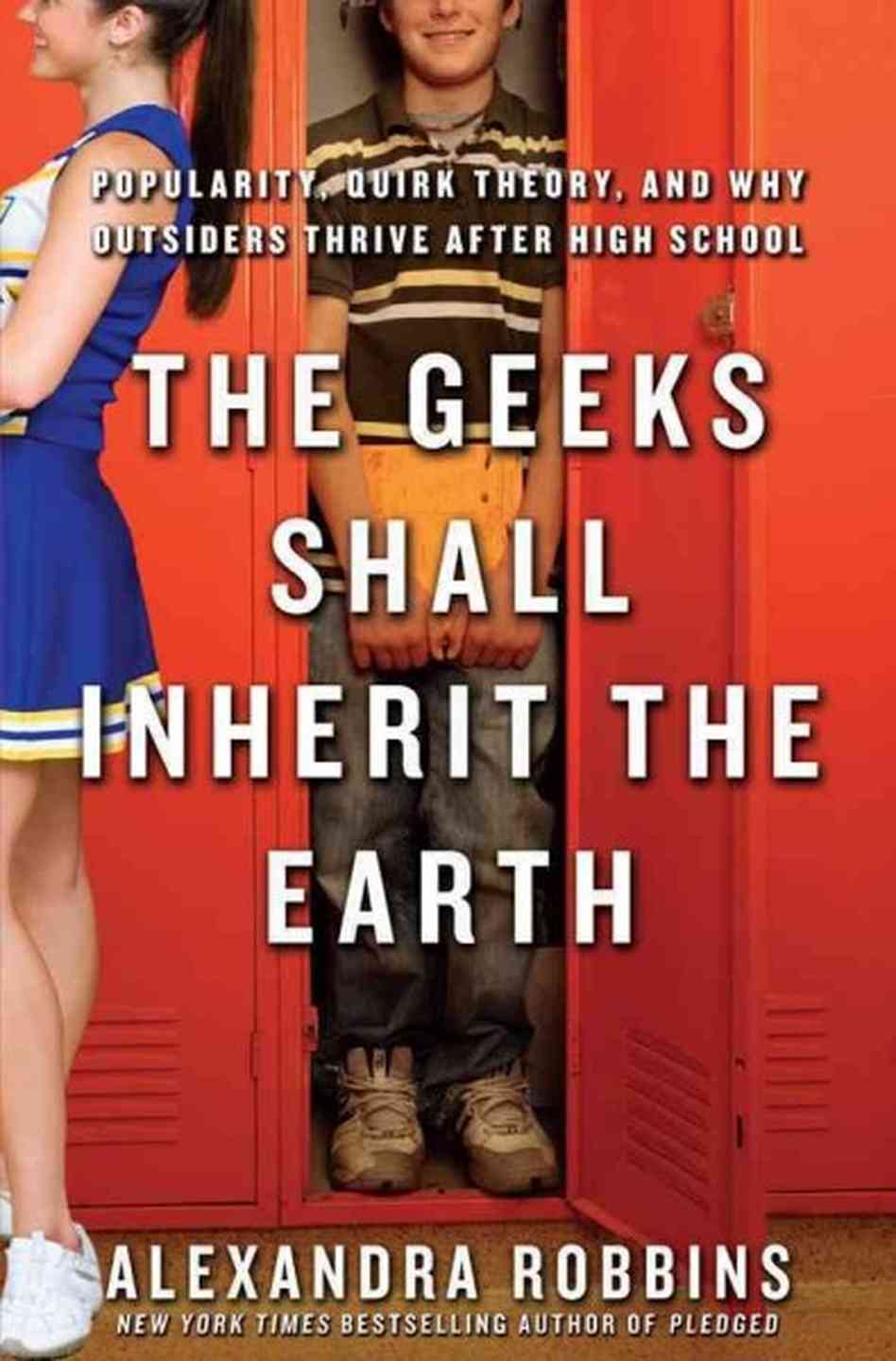
In this month’s book club we are going to attempt to uncover the answer to just that. Perhaps in analyzing why the losers, geeks, and outcasts in American teen culture gain access to a more promising future, we can finally solidify the “how” in our own stories and thereby paint a more holistic picture for our struggling youths than “it just will.” To do this, we will be reading “The Geeks Shall Inherit the Earth: Popularity, Quirk Theory, and Why Outsiders Thrive After High School” by Alexandra Robbins. No stranger to writing great non-fiction about the youth of America, Robbins notes in “Geeks” that she kept encountering kids who felt like there was something catastrophically wrong with them because they weren’t popular or they were bullied. In my experience as an educator of middle/high school students at various forensics institutes over the years, I have answered these same worries in ways probably not uncommon to those of you who have found yourselves in a role-model situation. “There’s nothing wrong with you. High school is crazy. The stuff that makes you unique now is gonna make you popular later!” and “The popular people are probably miserable too.”

geeks

Robbins takes a more academic approach to her answer and presents “The Quirk Theory,” explaining that the passions, idiosyncrasies, interests and all the stuff that makes one considered weird as a kid are the very quirks that will turn them into cool, interesting, and successful adults. And it’s true–as adults we reward passion; children, for whatever reason, tear it down. As my peers and I settle in comfortably on “the other side,” all it takes is a quick voyeuristic scan on social media to see endless examples of this theory in practice. Oh you can build a computer in your spare time? Awesome! I bet you’re making a shit ton of money. You’re working for an NGO in Botswana? Killer! Your stories are probably super interesting. You just crocheted a whole blanket? WHUT?! The patience! The creativity! Sell that shit on Etsy, dawg! The computer geek. The dirty hippie. The shy girl who sat by herself at lunch. In a matter of years these labels become completely reframed.

Robbins’ book follows 7 high school students labeled as, “the loner, the popular bitch, the nerd, the new girl, the gamer, the weird girl, and the band geek.” Following each student for a school year, you begin to recognize these people. Maybe you see yourself or someone you knew. Peppered in between these narratives are essays on popularity, how schools make the social scene more intense and the psychology of exclusion; all of which seek to help answer our underlying question–why did everything we hated about ourselves in high school, all the things that made us different and therefore BAD, suddenly turn us into the best versions of ourselves? How in Jesus’ name did we grow-up and suddenly get cool?

In a world where we’re spending tons of money on anti-bullying campaigns and initiatives, as I begin this book, the glaring systemic problem seems to be something we’ve yet to address. By promoting certain activities over others, the school systems are basically telling kids who should be bullied and who should do the bullying. As adults, I think we can do better. This discrepancy obviously hits close to home. I was a speech dork in high school–competing for a team who split their time 50/50 between practice and fundraising. We rehearsed on the same loop upstairs that the cross-country team ran on;  as we spoke to walls, snickering runners continuously lapped us in a never-ending stampede. Would our popularity trajectories have looked differently if the school was buying US new suits instead of the swim team? Who’s to say?

In an attempt to get to the bottom of all of this, why not join in the book club fun? A book club, you ask? FUN?!? That would soooo not have been cool in high school! So celebrate your adult-self and all the nerdiness you’re now allowed. Pick up a copy of “The Geeks Shall Inherit the Earth: Popularity, Quirk Theory, and Why Outsiders Thrive After High School” by Alexandra Robbins and let’s get weird.

(Top image via here.)

Any initial thoughts? Do you feel like you had a label in high school? What weird things about your high school self do you find gains you positive attention as an adult? What would you tell a student who is struggling with their outcast status today? Feel free to leave your answers in the comments below! And tune in each Friday!

Book Club: In Pursuit of Female Road Narratives Pt. 3

book-club

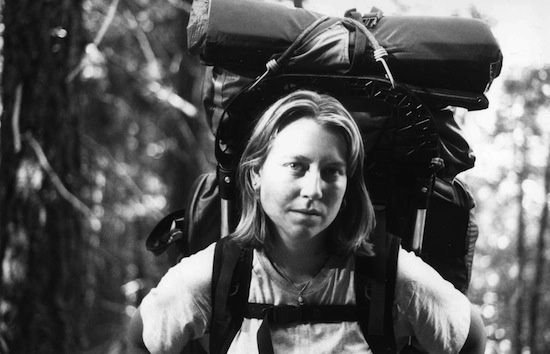
Our journey towards discovering a positive female road narrative is almost complete. The summit is on the horizon! If you’d like to catch up, you can learn more about the lack of this particular literary genre here, get the book here and participate in some extended watching here. Today, I’d like to bring you some extended reading in the form of articles, interviews and blogs, as well as some book recommendations to keep you moving forward in our quest towards setting the precedent for women on the road to appear in American literature in a heroic light.

whatpath

Arguments for solo travel–

Why Women Should Travel Alone by Koty Neelis

A Journey to the Center of Your Self by Veronica Chambers

…and the inspiring Wikipedia page of Ida Laura Pfeiffer; Austrian, solo female round-the-world explorer and travel writer. (For those of you who enjoy going down the Wikipedia rabbit hole!)

CherylStrayedMonster

In the words of Cheryl Strayed–

An Interview: On “Binge Writing,” Doling out Advice, and Finding Clarity by Jenn Godbout (“Write like a motherf*cker.” <3)

The Love of My Life  by Cheryl Strayed from the September 2002 issue of The Sun Magazine

bookcollage

Books to continue our journey–

Fantasy Novel ~ Swamplandia by Karen Russell

Appalachian Trail Thru Hike Memoir ~ Becoming Odyssa by Jennifer Pharr Davis

Cultural and Anthropological Exploration ~ Four Corners by Kira Salak 

hikingblogmountain

Blog obsessed–

Pacific Crest Trail ~ Dorothy’s Thru-Hike Journal 

Appalachian Trail ~ An Extraordinary Hike (this solo female hiker did not summit Mt. Katahdin but I still think her blog is an awesome account of a lady setting off on her own and a powerful example that our journeys don’t always lead to our intended destinations.)

Lady Travel ~ Her Packing List

cherylauthor

Other books by Ms. Strayed–

Tiny Beautiful Things: Advice on Love and Life from Dear Sugar

Torch 

~~~

Next week I will be writing a final review of “Wild: From Lost to Found on the Pacific Crest Trail” by Cheryl Strayed. 

AND…

all this reading and research about travel and hiking, along with the smell of Spring in the air, has me itching for a hiking trip. Do you have any trail recommendations? Long or short, near or far–I’d love to hear! 

Book Club: In Pursuit of Female Road Narratives Pt. 2

book-club

As we continue on our literary journey, hiking alongside Cheryl Strayed in Wild: From Lost to Found on the Pacific Crest Trail, I’d like to bring you some extra material and hopefully  extend your pursuit of the female road narrative beyond the confines of Strayed’s pages. Admittedly, I can fall down the rabbit hole on a lot of subjects but I think doing so in an attempt to provide a more holistic reading experience is a worthy plummet. Along the way I’ve raised some points for you to ponder and meditate on. Let’s jump right in!

More with Cheryl Strayed

Besides some online written reviews, the first press I heard about “Wild” and Strayed’s journey was on one of my favorite radio shows, Q with Jian Ghomeshi. Here, Jian asks some poignant and thoughtful questions…

FOOD FOR THOUGHT: Would you hike the Pacific Crest Trail? What do you think Cheryl means when she says she “writes in the company of fear and I’m used to it”? 

Cheryl delivers a lovely TEDTalk on Radical Sincerity and explains, “our deepest treasures are buried in the crappy detritus of our life.” This idea was glaringly apparent to me with each passing chapter of her story and reiterated here. What I found so compelling throughout “Wild,” and perhaps you’re picking up on this through the pages as well, was how her physical pain throughout the hike served as a larger metaphor for her emotional pain, so much so, that it became unclear where one ended and the other began. And this is true in her speech here as well. It’s as if she could be talking about hiking 1100 miles or losing her mother at 22 or both…and for some reason I find that so beautiful.

“It was the most heroic thing I had ever done and that suffering was the greatest suffered…Carrying this weight I couldn’t bear; I bore it. Couldn’t live in a world without my mother; I was living in one.” 

FOOD FOR THOUGHT: What is the most heroic thing you have ever done? Was it physical or emotional?

Setting off into the great unknown as a woman doesn’t have to be scary, it can be empowering. (Plus, Oprah insists she just got a cellphone. *side eye*)

FOOD FOR THOUGHT: What is the longest stretch of time you’ve spent alone? 

Cinematic Renderings of the Female Journey

When reflecting on on-screen odysseys of the feminine nature there are a few forms that come to mind:

Traveling home (NOW)…or with your peers for protection (THEN)…

To escape…when you’re “in trouble”…

When the trail eventually leads to a man…

I’ve watched these movies (multiple times each) and I’m drawn to these journeys and stories, too. Yet, I recognize that these can’t be the only paths. Surely there are other, unpaved roads for we women to pave…and movies we can make about the process. : )

FOOD FOR THOUGHT: What film journeys come to mind when you think about a woman on the road? Do they fall into these categories? Why do you think these particular narratives are more palatable to us? 

Possible Paths

Perhaps you are like me and “Wild” has struck a cord on more counts than just acting as a positive example of a female road narrative. Perhaps, you too have dreams of backpacking far off lands and long distance hiking.

To watch some kick-ass, back-packin’ the world, travelin’ expert ladies; I would recommend checking out the travel show Globe Trekker here. If you’re not feelin’ paying to watch the episodes, I’ve checked out many Globe Trekker DVDs at my local libraries and I think it comes on PBS2 if you got channels and such. They travel all around the world and highlight tips for solo travel. Great for a hearty dose of wanderlust.

To watch some kids KILLIN’ IT on the Appalachian Trail check out this. These three hiked the length of the AT and made 31 awesome webisodes documenting their journey. Their silliness and spirit was moving and inspiring. I hope to tackle future hardships by taking a page from their book–always laughing, humbled by the beauty of nature, drawing on the strength of community and love. Once you watch their first update you’ll probably accidentally binge watch them all…so, sorry about that.

FOOD FOR THOUGHT: If you could write a road narrative into being RIGHT NOW, what would that journey look like? Where would the road lead?

“I hope you keep walking.” ~Cheryl Strayed