Category Archives: Brainpower

An Interview with Dick Does Poetry.

Around the same time I came out to the World Wide Web at large as a “blogger,” I noticed that one of my  very talented friends, Richard Heyne, was diving into a new and exciting project of his own. And yes, this spoken-word artist, writer and educator is making quite the splash. Dick Does Poetry brings weekly videos of Richard’s self-written poems to your computer screen in a social media blitzkrieg.


I was intrigued by this project from the beginning–I’ve been a huge fan of slam and spoken-word poetry for years but have always felt a little shy about the process. I’d much rather hide behind the words on the page in the hopes that if an audience hears their own voice, as well as mine, in what I write, they won’t…well….hate it. Dick Does Poetry completely turns this fear on it’s head by taking the internet oath to bring you new content each week. The poems themselves are diverse and vulnerable, they aren’t always perfect. But, as Richard points out, that’s the point. Desensitizing us to the grittiness and honesty of a quick turnaround poem could do a lot to encourage the masses to share their art, too. Richard’s project also attempts to ameliorate writer’s block for his audience. A unique twist in a genre that can sometimes come off as a little self-aggrandizing. And Dick Does Poetry offers this new, accessible approach to poetry and community all through the power of YouTube…
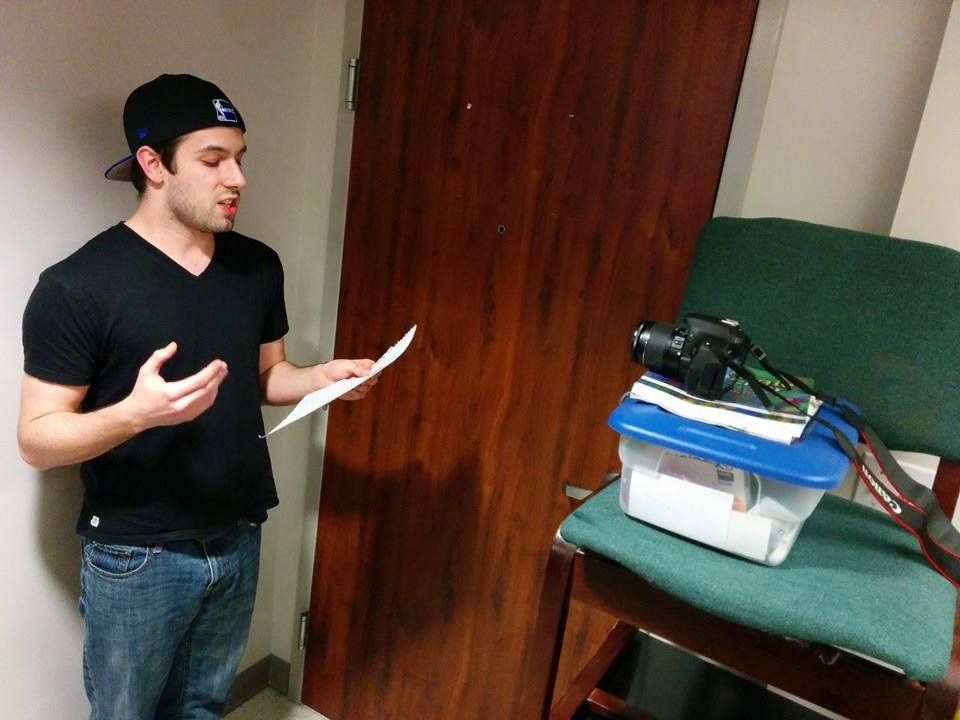
Dickrecords

Eager to learn more about Dick Does Poetry, I set up a chat with the Dick behind the poetry…Check it out!

First things first, give us a rundown of your project.

Okay, so basically, Dick Does Poetry is a YouTube channel that celebrates the spoken word. Every week I upload at least one new poem. One element that makes this project unique is the video description for each of these videos includes the prompt that I used to write whatever poem people are listening to. This was inspired by the fact that no one is really out there doing what I’m doing right now. YouTube is such an awesome resource for performance artists. Yet, when you try to find spoken word (or any poetry for that matter) you get a lot of performances in coffee shops or poetry slams. While these are awesome, the video quality is usually so bad that you can’t fully enjoy the poetry. I’m hoping that my channel will inspire others to follow suit–start their own channels and share their own poetry. The prompts are there to help keep them inspired and writing.That being said, my project is also for anyone who just wants to enjoy some poetry. It is nice to have a source that is constantly adding new material. So, I want to provide that as well.

You mentioned that you share the method (prompt, inspiration, etc) that informed each of your poems in the “About” section of their video. Where did that idea come from?

Well, I don’t want this to be something only I do. Right now the project is growing and starting to pick up steam. I’m hoping as it becomes more established, similar channels will emerge. People will use those prompts and write their own poems. Maybe post video responses to my original video. I mean, wouldn’t it be cool to have all these different channels where everyone is just writing and sharing and providing feedback? I’m a dreamer. I love poetry. I think this can happen.

How did you initially stumble upon the spoken word community?

I first started doing spoken word in 10th grade, and competed in my first slam that same year. My Speech & Debate coach (Travis Kiger) was somewhat of a spoken word guru and took me under his wing. He took a group of us to go compete in this slam at the Write Side Café in Ft. Lauderdale, FL. I wish I had filmed this whole process. It was for sure a little comical. There were like eight students from my school competing and maybe ten other poets who actually knew what they were doing. The slam was set up to find members for the Ft. Lauderdale Brave New Voices team. (Brave New Voices is the largest high school slam in the world). Well, this slam was somewhat of a train wreck. We weren’t memorized. We were shy. It just didn’t go well.To make the team you had to finish top four. I managed to get 5th after performing a poem about breaking up with God that was received really well. I got a perfect 30, and it gave me just enough of a bump to almost make the team. But, alas, you needed to get top four.However! Team Jacksonville was at that slam, scoping out the competition. Long story short, they liked me. They reached out to me. I went to Brave New Voices with them. Out of the 50 teams there from around the world, we made it to the final stage.I performed for over three thousand people, and I’ve pretty much been hooked since.

Web-based projects like yours are awesome because they make art so wonderfully accessible but they can also act as educational tools. What new knowledge do you think Dick Does Poetry followers can take away from your project?

The biggest takeaway from this project is there is nothing to fear with sharing your poetry. That is easily everyone’s greatest fear, and I suspect the reason why this kind of project doesn’t exist. Yes, I have gotten some really mean comments. Yes, people send me feedback that is helpful, but also hurtful. Hell, I recently got my first dislike! That sucked! But, that is just part of what we do. Poets are special because they know how to capture beauty and vulnerability and things that normal people only feel, but don’t understand. We are the interpreters of life. Unfortunately, we’re also a closeted bunch. Sure, the prompts are fun. The poetry is pretty decent and getting better. But, when I have a poet message me and say they started writing again because of this channel, or they think they’re ready to do their first poetry reading because of what I’m doing… THAT’S what I want to teach. Screw the haters. They’re going to exist in your life, regardless of what you’re doing. So why not do something beautiful? Enough people will be there to love and support you.


Were you nervous about starting such a visible project?

YES! I was scared as hell starting this thing. I’ve had this idea since my sophomore year in college. I’m a second semester senior and I’m just now starting it. Understand a lot of these poems I’m writing the week before. It is very Trey Parker and Matt Stone of me. I write on Saturday, revise Sunday and Monday, film Tuesday, edit Wednesday, record the outro and upload to YouTube on Thursday. A lot of poetry we see has gone through workshops, several rounds of revision, performance work, memorization, etc. I’m kind of just winging it. It’s scary. I stumble in the videos. I make odd inflections with my voice. But, that is what this channel is all about. Making mistakes. Learning. Growing.

We’re always in pursuit of lifelong learning here on the ol’ blog, I’d love to know–what resources would you recommend for readers who would like to delve deeper?

Okay, with these questions, people like to leave a laundry list of things. I’ve always found that overwhelming. Anyone who wants to delve deeper, go on Amazon and buy The Monkey and The Wrench edited by Mary Biddinger and John Gallaher. You can get it for like fifteen dollars and it will change your entire outlook on poetry. I’ve read it like eight times.


Finally, who do you write FOR?

I write for who I used to be. For who “we” used to be. So much of poetry, and life for that matter, is based on reflecting upon what has happened up until this point. I’m constantly trying to evolve, and take a lot of pride in each step I take forward. In that process, we lose pieces of ourselves. One of the most heartbreaking facts of life is no one will ever be the same forever. I want to capture every version of myself in a time capsule- type fashion. I write for the homophobic middle school Richard. I write for the awkward high school Richard. I write for yesterday’s Richard who I’m still trying to figure out. Hopefully along the way I write a lot of truth. Hopefully people take something from that. Hopefully it lasts for a lot of lifetimes. The quotation I live by is from my favorite author Chuck Palahniuk: “We all die. The goal isn’t to live forever, the goal is to create something that will.”

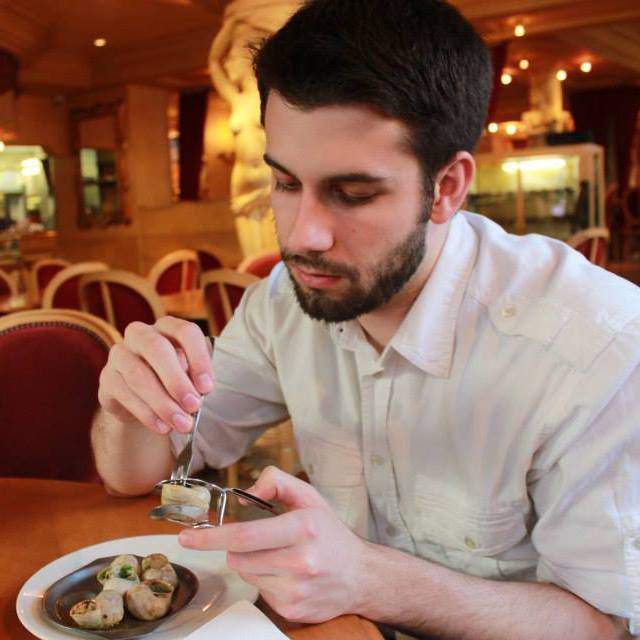
Thank you so much, Richard!
dick

If you’d like to be in the Dick Does Poetry loop…

Subscribe to the YouTube channel here.

Follow on Twitter here.

And LIKE on Facebook here.

Now, scoot on over to Richard’s channel and watch some poetry videos! Make today the day you write a poem! If you’re feeling newly inspired and brave…record it, upload it to YouTube and share it with Dick Does Poetry! There is no stopping a community of words, a community of voices bound together. And as Richard would say…

❤ Peace, love and poetry! ❤


Book Club: In Pursuit of Female Road Narratives Pt. 4

book-club

“Wild: From Lost to Found on the Pacific Crest Trail” by Cheryl Strayed is the story of one woman on two concurrent journeys–forging a path through her own grief towards healing, acceptance and self-forgiveness as well as blazing the physical Pacific Crest Trail on an eleven-hundred mile solo hike. As mentioned before in our little virtual book club, I initially heard about this travel memoir on one of my favorite radio programs and felt reading it was of the utmost importance after stumbling upon Vanessa Veselka’s essay about the lack of female road narratives and why it matters.

For the last year or so, admittedly, I’ve been pretty obsessed with the idea of long-distance hiking, spending hours researching various trails and reading books and blogs about those who have made these trips.

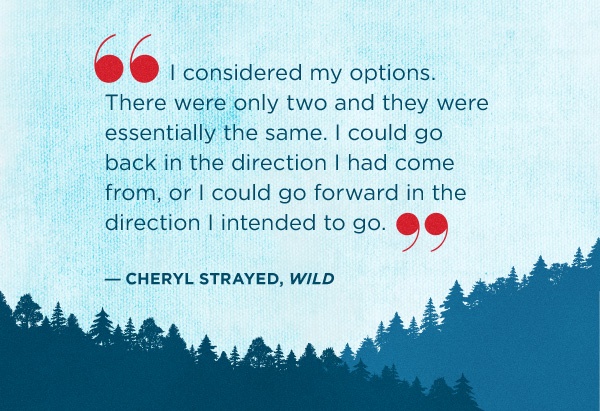
strayedquote1

Suddenly, reading Veselka’s essay made me put 2 and 2 together–there were and ARE women out there who are going on magnificent journeys! They are walking from Georgia to Maine, from the Mexican border to the Canadian, they’re seeing our country in new ways, they are heroic and SOMETIMES–they are doing all of this ALONE. Strayed does not spend time justifying her ability or right to tell this story. She just tells it.

Whether you relate to the physical pain she endures; carrying her huge backpack lovingly nicknamed “Monster” and doctoring banged up feet from ill-fitting boots, or her emotional pain; the death of her mother and the end of her marriage–there are moments of palpable empathy throughout.

Do not let the fact that this book is so heavily touted by Oprah (it is emblazoned with her Obrah Book Club sticker/seal of approval) dissuade you. Oprah knows what’s up and this is no Nicholas Sparks feel-good novela. Instead, it is an honest depiction of a normal woman who went from “lost” to “found.”

Strayed doesn’t leave anything out when painting you a picture of herself as “lost.” Even though this depiction is far from from flattering. This candid portrait of Strayed’s miserable life reminds me of a part I played in college forensics, a woman on the road who put it very simply,

“When you’re laying face down on the ground there’s nowhere left to fall.”

Strayed hit rock bottom. There was no place left to climb but out.

strayedquote2

I truly believe this book is a great introductory read for anyone who is seeking out female road narratives. We’ve demonstrated over the last 3 weeks that stories like this one are hard to find. Reading it will hopefully reveal how women on their own and on the road can have a place in not only our literature but our cultural landscape, too.

In her essay, Veselka argues, “True quest is about agency.” Meaning, when we relegate women’s journeys to mistakes, escape or a plot twist only to end in tragedy, we are robbing them of just that. Instead, we need to afford women the possibility and ability to tell stories like Strayed’s.

Veselka explains, “You can go on a quest to save your father, dress like a man and get discovered upon injury, get martyred and raped, but God forbid you go out the door just to see what’s out there.” I want women to see what’s out there. I want to see what’s out there.


…So I read. I go on adventures. And I encourage you to do the same.

(Quote illustrations via here.)

Thank you so much for participating in this inaugural virtual book club on Finding Delight. I loved discussing everything with you and hope you felt just the teensiest bit inspired! I hope to do it again real soon. : )

Grief, Facebook and Ambient Awareness.


grief

A couple years ago a girl I went to high school with took her own life. We didn’t have many classes together except for Film Studies, which if we’re being honest, while we sat next to each other, we both usually slept through. We spent the night together on someone’s basement couches during a string of luck known as multiple snow days in a row. We ate lunch at the same table every other day my senior year. Friendships play out; people go their separate ways. Within hours of her last breath I knew that she was gone. I got a little teary and thought, “she did seem so sad lately.”

Just a few short years earlier and hers would have been a tragedy I would hear about from my mom or a co-worker, someone who had read the day’s obituaries in the local paper and put it together that she and I had graduated from the same high school in the same year. They would have asked, “Did you know this girl? She died.” And with a cloudy recognition her name would invoke a familiar face, maybe memory would pull up a conversation we had about prom over cafeteria fries. But, even though I hadn’t seen her since we received our diplomas, at the time of her passing I had been watching her for years.

If you were around for the beginnings of Facebook you know what I mean when I say she was one of those people who immediately sent friend requests to everyone from our high school graduating class. Of course I accepted. Only a few months before we were making “WTF?” faces to each other over an unnecessarily difficult final film exam. Yet, as the time between that last school bell and the present got longer and longer, I kept her in my little online social sphere.

It sounds cliche but I guess we all (that first Facebook generation) watched each other grow up. I watched her picture on my screen go from trying to look cute to business casual.  Saw her play with her dogs. Fall in and out of love. Compose frustrated words about work and chronic pain. Watched as she clicked “post” on words that someone, somewhere must now know were for them, begging them to help her. And it’s weird because her death hit me harder than I thought it should–even though I know those words weren’t for me–or really for so many of us that inevitably saw them. How should grief look for those of us merely ambiently aware of a life now cut short?

In college, I became quite taken with the idea of “ambient awareness,” or, the term sociologists coined for the peripheral social awareness we experience by participating in online social media. Within this online world we have an omnipresent knowledge and constant connection with our social circle. And this notion seems counter-intuitive when you look at the process of gaining and maintaining a social circle in generations prior. In childhood you have a whole slew of friends–from school, the neighborhood, summer camp, ballet class, soccer team. At the end of your K-12 schooling you’re at the peak. You move away from home–maybe a few of these hometown friendships remain but not many. You replace the old friends with new. Maybe you move again. Lose touch with more people. Meet a few new. And on and on…never quite regaining enough ground to maintain the sheer volume of friendships you once had. But that was ok. In fact, social scientists assured these past generations this was normal, scientifically natural. Now, imagine having a level of awareness regarding every single one of those acquaintances you acquired on your path to your tiny but acceptable social group. Imagine never shedding yourself of the neighborhood kid who shared their scooter or the girl who lived 2 doors down in your sophomore dorm. Knowing details about their lives that ranged from mundane to intimate. Sociologists now compare this unprecedented, snowballing trajectory to being stuck in a small town for the rest of your life.

In his New York Times article, Clive Thompson said ambient awareness is, very much like being physically near someone and picking up on mood through the little things. Meaning, as we scroll through someone’s digital information we are noting tone through micro-blogging, pictures, shares and comments. The banal informs a larger narrative.  Thompson argues:

“This is the paradox of ambient awareness. Each little update — each individual bit of social information — is insignificant on its own, even supremely mundane. But taken together, over time, the little snippets coalesce into a surprisingly sophisticated portrait of your friends’ and family members’ lives, like thousands of dots making a pointillist painting.”

And when the dots create a dark formation, a somber painting you didn’t necessarily want to see but couldn’t turn away from, the portrait of the life feels just as real, even though physically lacking.

News of a stillborn baby has felt like a kick in the gut because I watched a woman “like” baby photos and share articles about natural family planning. Smiled when she finally announced her pregnancy–seemingly to me. Rolled my eyes at an ultra-sound picture (but was secretly endeared). Laughed at her candid and far-from-flattering description of her pregnant-self. Furrowed my brow with worry when she announced the inactivity inside of her.

A grieving father’s words have felt like sickening voyeurism; his pain too raw and intimate to be included in. Yet with each passing day I would go back for more until eventually I could see the storm passing and the light breaking through. I felt a weight release from my chest at the thought of his healing.

This grief is something past generations have not had to navigate but that doesn’t make it any less real. We are sort of charting new waters here, so I suppose, what I’m saying, is let’s chart them well. I was profoundly touched a few months ago when, yet again, my computer screen was the bearer of tragic news, and I learned another life had been cut too short. In the days that followed I watched a whole community of peripherally aware individuals exemplify kindness and goodness. Their grief manifested into a beautiful display of solidarity, stories detailing memories, and even spreadsheets for donations of food called-in from thousands of miles away. I watched as the constraints of physical presence melted away.  Perhaps, in the end, that’s the best and the easiest thing we can do. Be present without needing to be physically present. Isn’t that how the person at the other end of our grief reached us to begin with?

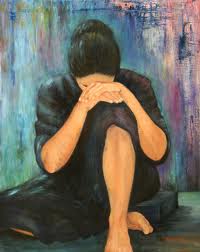
(Painting by Cynthia Angeles)


Book Club: In Pursuit of Female Road Narratives Pt. 3

book-club

Our journey towards discovering a positive female road narrative is almost complete. The summit is on the horizon! If you’d like to catch up, you can learn more about the lack of this particular literary genre here, get the book here and participate in some extended watching here. Today, I’d like to bring you some extended reading in the form of articles, interviews and blogs, as well as some book recommendations to keep you moving forward in our quest towards setting the precedent for women on the road to appear in American literature in a heroic light.

whatpath

Arguments for solo travel–

Why Women Should Travel Alone by Koty Neelis

A Journey to the Center of Your Self by Veronica Chambers

…and the inspiring Wikipedia page of Ida Laura Pfeiffer; Austrian, solo female round-the-world explorer and travel writer. (For those of you who enjoy going down the Wikipedia rabbit hole!)

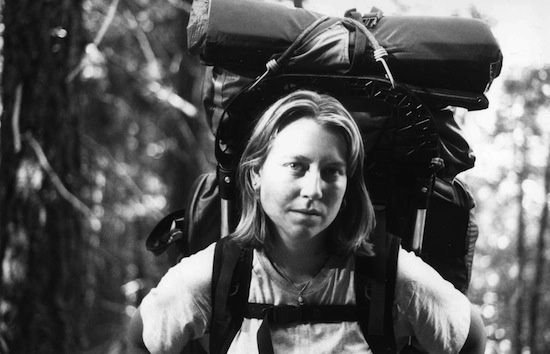
CherylStrayedMonster

In the words of Cheryl Strayed–

An Interview: On “Binge Writing,” Doling out Advice, and Finding Clarity by Jenn Godbout (“Write like a motherf*cker.” <3)

The Love of My Life  by Cheryl Strayed from the September 2002 issue of The Sun Magazine

bookcollage

Books to continue our journey–

Fantasy Novel ~ Swamplandia by Karen Russell

Appalachian Trail Thru Hike Memoir ~ Becoming Odyssa by Jennifer Pharr Davis

Cultural and Anthropological Exploration ~ Four Corners by Kira Salak 

hikingblogmountain

Blog obsessed–

Pacific Crest Trail ~ Dorothy’s Thru-Hike Journal 

Appalachian Trail ~ An Extraordinary Hike (this solo female hiker did not summit Mt. Katahdin but I still think her blog is an awesome account of a lady setting off on her own and a powerful example that our journeys don’t always lead to our intended destinations.)

Lady Travel ~ Her Packing List

cherylauthor

Other books by Ms. Strayed–

Tiny Beautiful Things: Advice on Love and Life from Dear Sugar

Torch 

~~~

Next week I will be writing a final review of “Wild: From Lost to Found on the Pacific Crest Trail” by Cheryl Strayed. 

AND…

all this reading and research about travel and hiking, along with the smell of Spring in the air, has me itching for a hiking trip. Do you have any trail recommendations? Long or short, near or far–I’d love to hear! 

Java Justice

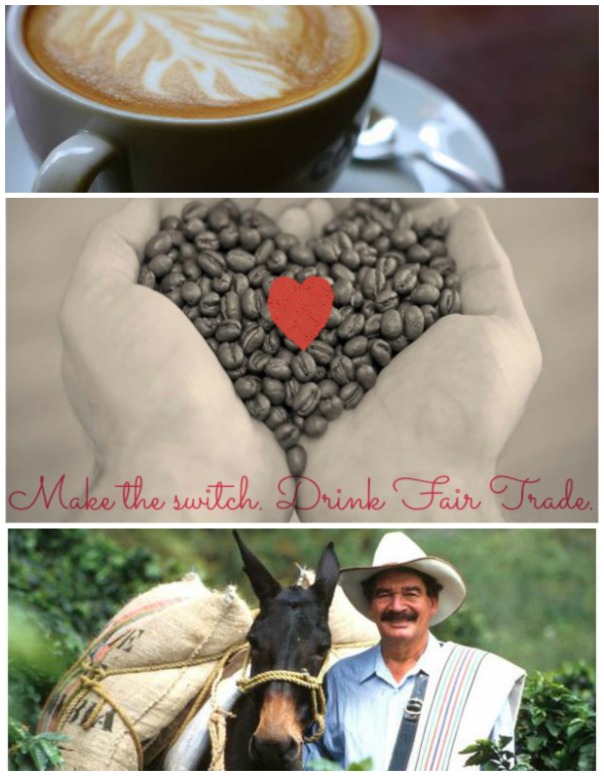
make the switch collage

Today, I’d like to share a very special guest post written by my Mom. She has long been at the forefront in terms of compassionate eating and consumerism so I thought, who better to turn to for some knowledge on why we should all make the jump to Fair Trade coffee purchasing? I am lucky to have been raised by this people teachin’, vegan eatin’, social justice fightin’ lady who has now realized her passion for all 3 can coalesce into one powerful mission—

I love coffee. I love it hot or iced (and anywhere in between really), plain black or fancied up as a cappuccino or latte. I love it morning, noon and night and am ever so thankful that it doesn’t seem to keep me from sleeping. But what I don’t love is how much of the world’s supply of coffee comes at a HUGE humanitarian cost. And so, I drink Fair Trade coffee. Let me explain.juanvaldez

You see, the coffee industry is nothing like what’s portrayed in those iconic coffee commercials of the 1960s with Juan Valdez and his sweet little burro. Rather, most of the agriculture workers in the coffee business toil in what can only be described as “sweatshops in the fields.” The farmers themselves receive prices for their coffee beans that are less than what they were forced to spend to produce them, pushing them into a cycle of poverty and debt. Their workers are often children, youth and women earning subsistence wages. Grinding poverty and illiteracy are stamped all over the coffee beverages most Americans consume – whether they’re brewing their own, downing a steaming hot cup they just got at the drive-through, or sipping one of those specialty drinks made by a trained barista at their yuppified coffee shop.

Coffee is the world’s SECOND most valuable commodity after petroleum, and U.S. consumers drink one-quarter of the beans traded in the global market. That represents a LOT of coffee. A HUGE amount of coffee. And a very large percentage of that coffee is consumed at the expense of millions of hard-working people around the world who by no fault of their own lack access to the information, services and infrastructure they need to participate as equals in the global economy; to earn their FAIR share of the wealth created by international trade. There is another way though, and one I’ve embraced for several years now.

maketheswitch

Fair Trade offers a means for small farmers to receive fair prices. It cuts out the middle men (there’s usually more than one) and provides not just a market for coffee but education for growing great coffee in an ecologically responsible way. And Fair Trade builds relationships between farmers and Fair Trade coffee companies in the U.S. This is the only approach that guarantees coffee farmers a fair price and workers a fair wage. Plus, this way guarantees the consumer a great cup of joe. Imagine, less poverty, less illiteracy, less oppression, all by doing what you’re already doing – drinking coffee. Mind-boggling and yet so simple.

Like I said, I started purchasing Fair Trade certified coffee at my local cooperative grocery store several years ago. I realize now that they were on the cutting edge of this movement. Then, it seemed the right thing to do and they were the only place to get Fair Trade. Today, Fair Trade coffee is far more available. Many stores carry, at least, some Fair Trade. Yes, it costs a little more than your can of ground coffee from the chain grocery store. But isn’t it worth it? By buying Fair Trade you are supporting coffee farmers in developing countries. You are insuring that coffee workers receive a fair wage and safe working conditions. You are putting children, who would otherwise be harvesting coffee beans, in school. You are doing more for the environment than that little bit of recycling you do does. And…drum roll please…you are getting really, really great coffee. It always tastes better!

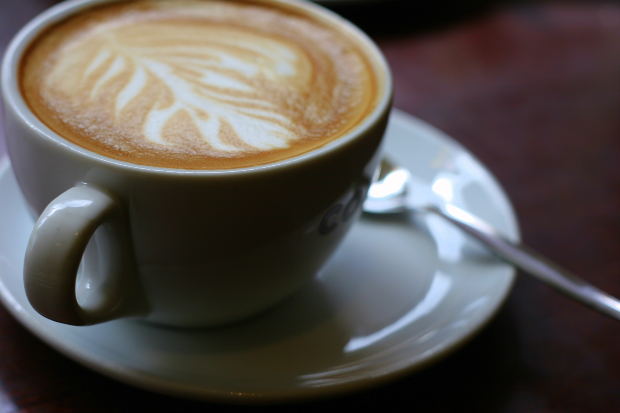
latte

Have I convinced you to go Fair Trade? Well, if not, stay tuned because I am sure to have more to offer in the near future. You see, I have been selected to attend specialized Fair Trade training in Baltimore, Maryland at the end of this month. I will then be a Fair Trade Ambassador. Perhaps Beth will have me back to talk about Fair Trade Chocolate and Fair Trade Tea and Fair Trade Olive Oil and Fair Trade Wine…you get the picture. Bottom line…we can make a difference in the world by what we consume – enjoy a cuppa Fair Trade coffee today and be the change you want to see in the world.

Thanks so much to my Mom, Pam Berger, for sharing! ❤ She’s gonna make such a rockstar Fair Trade Ambassador. And, what do you think, could you make the switch to going all Fair Trade for your cup of joe? 

Women of the Web: Ashley, Crystal and Erin!

collagewtext

It’s no secret that I love blogs. There are plenty of web presences I turn to for inspiration, information and advice. These interweb relationships are almost always with women–smart, strong, beautiful ladies who help keep me up to date, looking put together, eating well and laughing…all with a few clicks of my laptop. Today I’d like to share just a few women of the web I come back to again and again.

Ashley of {never} homemaker…

ashley

She writes about healthy recipes and running (and cross-training) tips here. After the birth of her adorable daughter Ada she started a second blog to cover more aspects of her family life. She makes a mean pizza, educates readers on what runners should be eating, and has tons of great posts for new runners in general.

To learn more about Ashley CLICK HERE.

To follow her on Twitter CLICK HERE.

And to follow her on Pinterest CLICK HERE.

Crystal of MoneySavingMom…

Crystal

She writes about living frugally, organization and scoring deals (couponing, freebies, etc) here. If you have a Kindle or e-reader, her round-ups of the weeks FREE e-books are worth checking out. This post set me on the right path to a cheaper grocery bill by spending a few weeks making short term sacrifices. And she has tons of income earning ideas and how-to’s for blogging for profit. Of course, you may be wondering why I; a single, liberal, non-churchy gal, would be turning to this Christian Mom blogger as one of my go-to’s. Well, the answer is simple–SHE HAS SAVED ME MONEY. And I love saving money. If you’re trying to cut costs or make the commitment to budget-livin’, I would absolutely recommend turning to blogs like these; home-schoolin’, bible quotin’, budgetistas…these SAHM’s get a bad rap but they’ve made saving money their full time jobs. Haters gonna hate but I’m addicted to Christian Mom bloggers. : )

To learn more about Crystal CLICK HERE.

To follow her on Twitter CLICK HERE.

And to follow her on Pinterest CLICK HERE.

Erin of Bad Yogi…

badyogi

She takes a fun, non-judgmental approach to yoga here. She also contributes stellar content to my favorite yoga site. She teaches this fantastic 30-day yoga challenge in which web followers everywhere fell in love with her yoga teaching style! ❤ (me included.) Her self-declared “bad yogi” style is easily adoptable and you can even purchase her super cute yoga tank top (WANT). I value her honesty.

To learn more about Erin CLICK HERE.

To follow her on Instagram CLICK HERE.

To follow her on Youtube CLICK HERE.

I hope you check these gorgeous ladies out and incorporate them into your own web rotation. I’d love to share more inspirational “women of the web” in future posts, if y’all would like. Who is providing you with internet inspiration these days? I’d love to hear! Thanks to Erin, Crystal and Ashley for providing such ride or die web presences in my life. ❤ 

Let’s go to the movies!

movietheater

If you’re living on a budget, one of the easiest places to make cuts is entertainment. I’ve even read several budget blogs and books that repeatedly call for penny-pinchers to “just stay at home” if they want to eliminate the risk of unwanted spending. While I can’t argue with the efficacy of this advice, I don’t see it as a plausible solution to financial struggles and I would love to discuss it a little more in depth at a later time. For now, I’d like to bring to your attention a community event trend that is a huge boon for all of us who don’t wanna shell out the big bucks for a night out of the house–the free movie. If you just do a little homework you are bound to find a few films each month that are of some interest to you at the low, low price of FREENINETYNINE! Bookmark some online calendars–your local college campus, libraries and Parks and Rec department are great places to start.

If you’re in the Lexington area, the board of directors at my darling place of employment sponsors a monthly film series. The documentary films are screened at the Lexington Central Library and typically feature a few expert speakers before or after the showing.

The next FREE movie event is Tuesday, March 25th from 6:30-9pm. The film is Food for Change, which examines the history of food cooperatives in America, as well as their ability to create economic and social change in our unique cultural landscape. If you’ve ever been curious about the cooperative business model or love your co-op but wonder what it does to strengthen local community, economy and food security; this film will provide some answers.

No reason to sit at home when there is free learnin’ to be had!

…And because I’m in full support of movie snacks, I won’t tell if you sneak in this and this…just don’t crunch too loud. ; )

Book Club: In Pursuit of Female Road Narratives Pt. 2

book-club

As we continue on our literary journey, hiking alongside Cheryl Strayed in Wild: From Lost to Found on the Pacific Crest Trail, I’d like to bring you some extra material and hopefully  extend your pursuit of the female road narrative beyond the confines of Strayed’s pages. Admittedly, I can fall down the rabbit hole on a lot of subjects but I think doing so in an attempt to provide a more holistic reading experience is a worthy plummet. Along the way I’ve raised some points for you to ponder and meditate on. Let’s jump right in!

More with Cheryl Strayed

Besides some online written reviews, the first press I heard about “Wild” and Strayed’s journey was on one of my favorite radio shows, Q with Jian Ghomeshi. Here, Jian asks some poignant and thoughtful questions…

FOOD FOR THOUGHT: Would you hike the Pacific Crest Trail? What do you think Cheryl means when she says she “writes in the company of fear and I’m used to it”? 

Cheryl delivers a lovely TEDTalk on Radical Sincerity and explains, “our deepest treasures are buried in the crappy detritus of our life.” This idea was glaringly apparent to me with each passing chapter of her story and reiterated here. What I found so compelling throughout “Wild,” and perhaps you’re picking up on this through the pages as well, was how her physical pain throughout the hike served as a larger metaphor for her emotional pain, so much so, that it became unclear where one ended and the other began. And this is true in her speech here as well. It’s as if she could be talking about hiking 1100 miles or losing her mother at 22 or both…and for some reason I find that so beautiful.

“It was the most heroic thing I had ever done and that suffering was the greatest suffered…Carrying this weight I couldn’t bear; I bore it. Couldn’t live in a world without my mother; I was living in one.” 

FOOD FOR THOUGHT: What is the most heroic thing you have ever done? Was it physical or emotional?

Setting off into the great unknown as a woman doesn’t have to be scary, it can be empowering. (Plus, Oprah insists she just got a cellphone. *side eye*)

FOOD FOR THOUGHT: What is the longest stretch of time you’ve spent alone? 

Cinematic Renderings of the Female Journey

When reflecting on on-screen odysseys of the feminine nature there are a few forms that come to mind:

Traveling home (NOW)…or with your peers for protection (THEN)…

To escape…when you’re “in trouble”…

When the trail eventually leads to a man…

I’ve watched these movies (multiple times each) and I’m drawn to these journeys and stories, too. Yet, I recognize that these can’t be the only paths. Surely there are other, unpaved roads for we women to pave…and movies we can make about the process. : )

FOOD FOR THOUGHT: What film journeys come to mind when you think about a woman on the road? Do they fall into these categories? Why do you think these particular narratives are more palatable to us? 

Possible Paths

Perhaps you are like me and “Wild” has struck a cord on more counts than just acting as a positive example of a female road narrative. Perhaps, you too have dreams of backpacking far off lands and long distance hiking.

To watch some kick-ass, back-packin’ the world, travelin’ expert ladies; I would recommend checking out the travel show Globe Trekker here. If you’re not feelin’ paying to watch the episodes, I’ve checked out many Globe Trekker DVDs at my local libraries and I think it comes on PBS2 if you got channels and such. They travel all around the world and highlight tips for solo travel. Great for a hearty dose of wanderlust.

To watch some kids KILLIN’ IT on the Appalachian Trail check out this. These three hiked the length of the AT and made 31 awesome webisodes documenting their journey. Their silliness and spirit was moving and inspiring. I hope to tackle future hardships by taking a page from their book–always laughing, humbled by the beauty of nature, drawing on the strength of community and love. Once you watch their first update you’ll probably accidentally binge watch them all…so, sorry about that.

FOOD FOR THOUGHT: If you could write a road narrative into being RIGHT NOW, what would that journey look like? Where would the road lead?

“I hope you keep walking.” ~Cheryl Strayed

Smudge.

photo3

photo2

photo1

I used to coach forensics (speech and debate) for one of the top collegiate programs in the nation. It was a wonderful job full of constant brainstorming and creativity, politics and passion, and some of the most fantastic people I’ve ever had the pleasure of working alongside. But the thing I miss most about my old profession is live entertainment. The possibility for performance at my disposal on a daily basis was an amazing job perk. Lucky for me these performances were by some of the most talented college students in the world! The beautiful thing about forensics performance, specifically interpretation of literature if you’re familiar, in my opinion, is it’s simplicity. These sort of no-costumes, no-lighting, no-sets, incredibly nuanced and detail-oriented performances have completely spoiled me over the years. Sure, I love a Broadway show with a budget of millions as much as the next snob but I also crave a performance where the focus is the text and character. Where I can totally suspend disbelief and my only guide in that suspension is the performer herself.

Now that I’ve been out of the world of competitive forensics for a few years I fully realize how much I took these performances for granted. I try my best to support the performing arts at the local level as much as possible. I want to use my dollars to keep these programs doin’ what they’re doin’ but also for selfish reasons–I CRAVE live performance.

Needless to say when my sister asked if I wanted to check out a play put together by a few of her pals I was totally game. The show was produced by Actor’s Guild of Lexington but wasn’t a part of their regular season lineup and only ran for a weekend. Tickets were only ten bucks. If you’re on a budget and love supporting local art, get on some e-mail mailing lists so you don’t miss out on opportunities like these. Many times theaters will run these awesome little shows on the cheaps but ya gotta be in the know! These shows typically have lower production values but will feature many of the same actors you’re gonna see in the regular season and are often directed by younger, less-seasoned directors–so they’re super eager and experimental. Hmmm…smells like forensics to me!

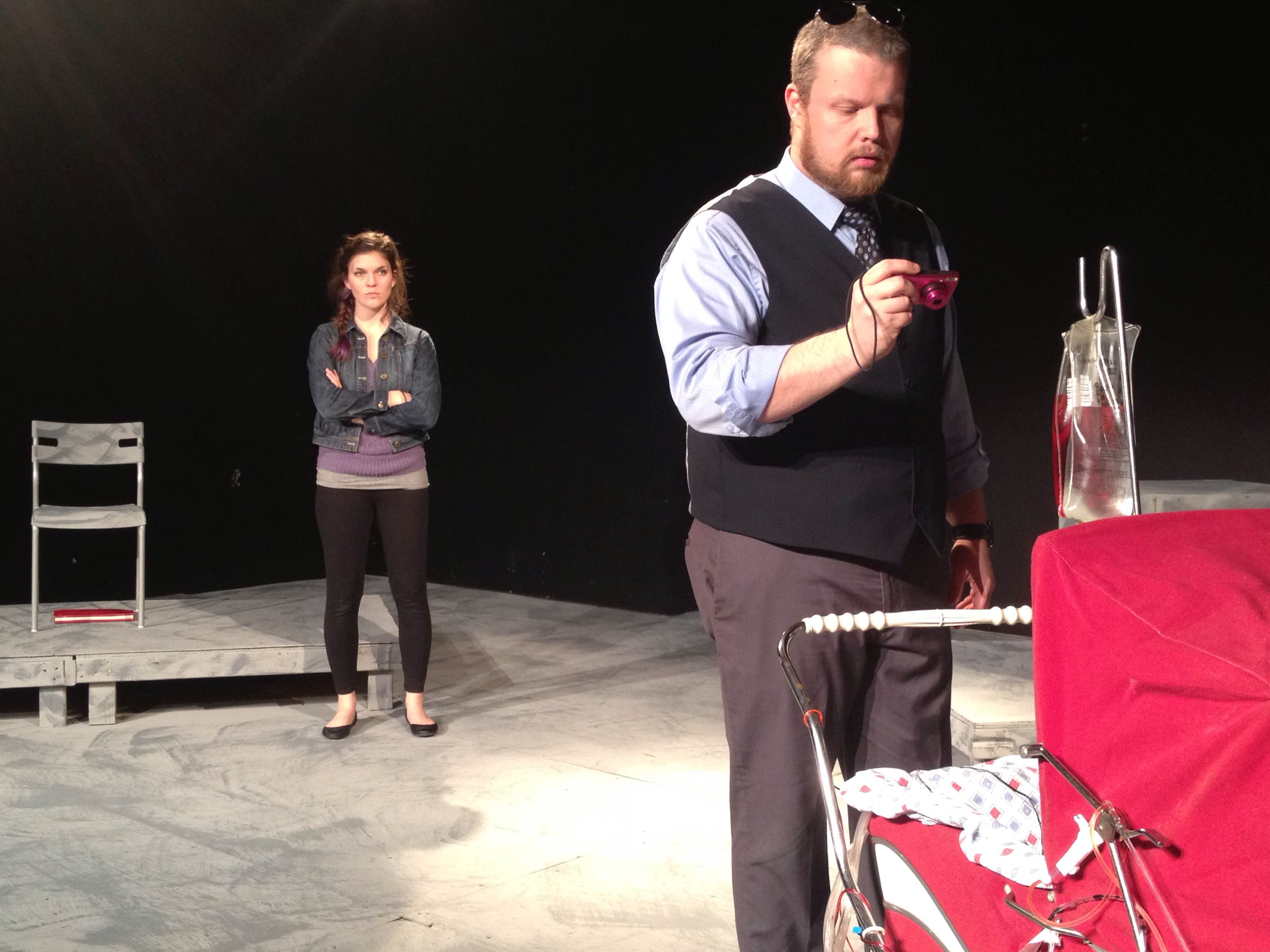
The play we were lucky enough to catch was “Smudge” by Rachel Axler, directed by Chrisena Ricci (assistant to the artistic director at AGL) and starring Cindy Head, Eric Seale (artistic director at AGL) and Marshall Manley. Katie and I loved it! Initially, I was just excited to see a show at the new Actor’s Guild location out Old Harrodsburg Rd. (near the Ramsey’s) but the performance itself ended up being quite a delight. : )

smudge

“Smudge” is the story of a young American couple giving birth to their first child and how they cope with the one in millions chance undetected abnormality she is born with. Cindy Head and Marshall Manley, as the young couple, played off each other extremely well and their scenes alone (and with the special carriage the baby had to stay in to survive) were equal parts comical and horrifying–dark comedy at it’s best. Eric Seale, as the uncle, was fantastic comedic relief. Most scenes had the sort of humour you weren’t sure you should laugh at because they featured squirmy subject matter. However, Seale’s scenes you knew you could. This dichotomy, in my opinion, is what made the performance work. The show culminated in a lovely scene, where the father, who worked for the census, presents a PowerPoint that tailspins into how his child fits into statistics. These numbers, coupled with the array of emotions displayed throughout the show, merge in pitch-perfect form and create a sense of finality, a sense that the characters can now, and we along with them, acquiesce to their given situation.

All in all, I thought the show’s simple set, props and costumes were a boon, as they didn’t add or detract from the honest performance the actors were giving. Just the sort of performance this former forensics coach can get behind. While the run was short and you’ve already missed out ; ), do keep your ear to the ground for future shows–the simple ones can sometimes surprise you!

AND if you’re looking for some live entertainment this weekend, Actors Guild of Lexington’s regular season show “Other Hands” opens TONIGHT and runs through Sunday. Wed-Sat shows are at 8pm and Sun is at 2pm. The show will be at Actor’s Guild of Lexington Theater, 4383 Old Harrodsburg Road #155 and you can purchase tickets here. Break a leg cast and crew!

(Photos generously provided by Chrisena Ricci.)

Book Club: In Pursuit of Female Road Narratives Pt. 1

book-club

The world is profoundly apprehensive when it comes to women on the move and on their own. Society has it in it’s pretty little head that a woman setting out into the great unknown will be met with a medley of hardships not shared by her male counterparts. Female travelers are viewed as progressive, doomed, and even stupid for flying solo.

When breathing life into my own daydreams about backpacking far-off lands or hiking the Appalachian Trail, the wind gets knocked out of my sails by a common response, “well, you’d have to find someone to go with you first.” And the colors in my dreams fade to ominous ones, get filled with other people’s boogeymen they assume belong in a story such as mine.

ontheroad

In her article, The Lack of Female Road Narratives and Why it Matters, Vanessa Veselka argues that we can’t fathom a positive outcome for a woman on the road because there is no precedent in American literary tradition, “no cultural narrative for [women] beyond rape and death.”

When a man steps onto the road, his journey begins. When a woman steps onto that same road, hers ends.

Veselka explains, we are all seeking something and this search is quintessential to our own human experience. “The Road Narrative” appears time and time again in literary canon, founded on a protagonist’s quest to go in pursuit of something greater than one’s self. From Ishmael to Frodo, Dean Moriarty to Huck Finn…

A man with a quest, internal or external, makes the choice at every stage about whether to endure the consequences or turn back, and that choice is imbued with heroism. Women, however, are restricted to a single tragic or fatal choice. We trace all of their failures, as well as the dangers that befall them, back to this foundational moment of sin or tragedy, instead of linking these encounters and moments in a narrative of exploration that allows for an outcome which can unite these individual choices in any heroic way.

The entire essay has stuck with me and I would highly recommend reading it in it’s entirety. Her words do a far better job than my own in describing to you why I have set out to find and read about women who embark on incredible journeys.

I had been hearing about “Wild: From Lost to Found on the Pacific Crest Trail” by Cheryl Strayed for some time but after reading Veselka’s essay I truly felt compelled to read it. After the death of her mother and a divorce, Strayed decided to hike the Pacific Crest Trail on her own.

She would face odds, yes; she would face fears and boogeymen put into her mind by others, but in the end, she was searching for something greater than herself–her quest was to heal. This is a story of heroism. (And her last name is Strayed for goodness sake. How lovely and poetic.)

wild

So, in the name of forging a path for lone women to travel across page and road, I would implore you to pick up a copy of this page-turner. It is at times heart-breaking and others laugh out loud relatable. Over the next few weeks I will be posting some fun, supplemental material that I scouted to elevate my own reading of Strayed’s work. If you’ve read “Wild” before or would like to read it now and join in the fun, pop on back and check it out.

Reading her story may be the first step towards creating an adventure narrative of your own. As Veselka closes her essay, women can no longer waste time justifying our right to tell these stories.

If we have a shot it’s going to be because we stopped asking permission and just started in the middle.